Personal Website — Built with Claude Code
Designed and developed this portfolio site from scratch using Claude Code, with no prior coding experience. The project was as much about learning how to work with AI effectively as it was about building a professional website.
Why I built it
I wanted a personal site I could direct professional contacts to. At the same time, I was looking for a practical first project to learn how AI coding tools actually work in practice. Building the site served both purposes with the ultimate goal of a hands-on education in what it takes to work in a blank terminal.
How I approached it
The build was driven by a detailed plan developed upfront in Claude. Before any code was written, I worked through the site structure, design direction, content hierarchy, and phased build checkpoints in conversation with Claude, iterating on the brief until it felt comprehensive enough to produce a strong result. That full plan was then fed into Claude Code's planning mode as the foundation for the build. One personal preference that shaped the workflow was questioning Claude directly in the terminal to understand what it was doing and why before letting it proceed.
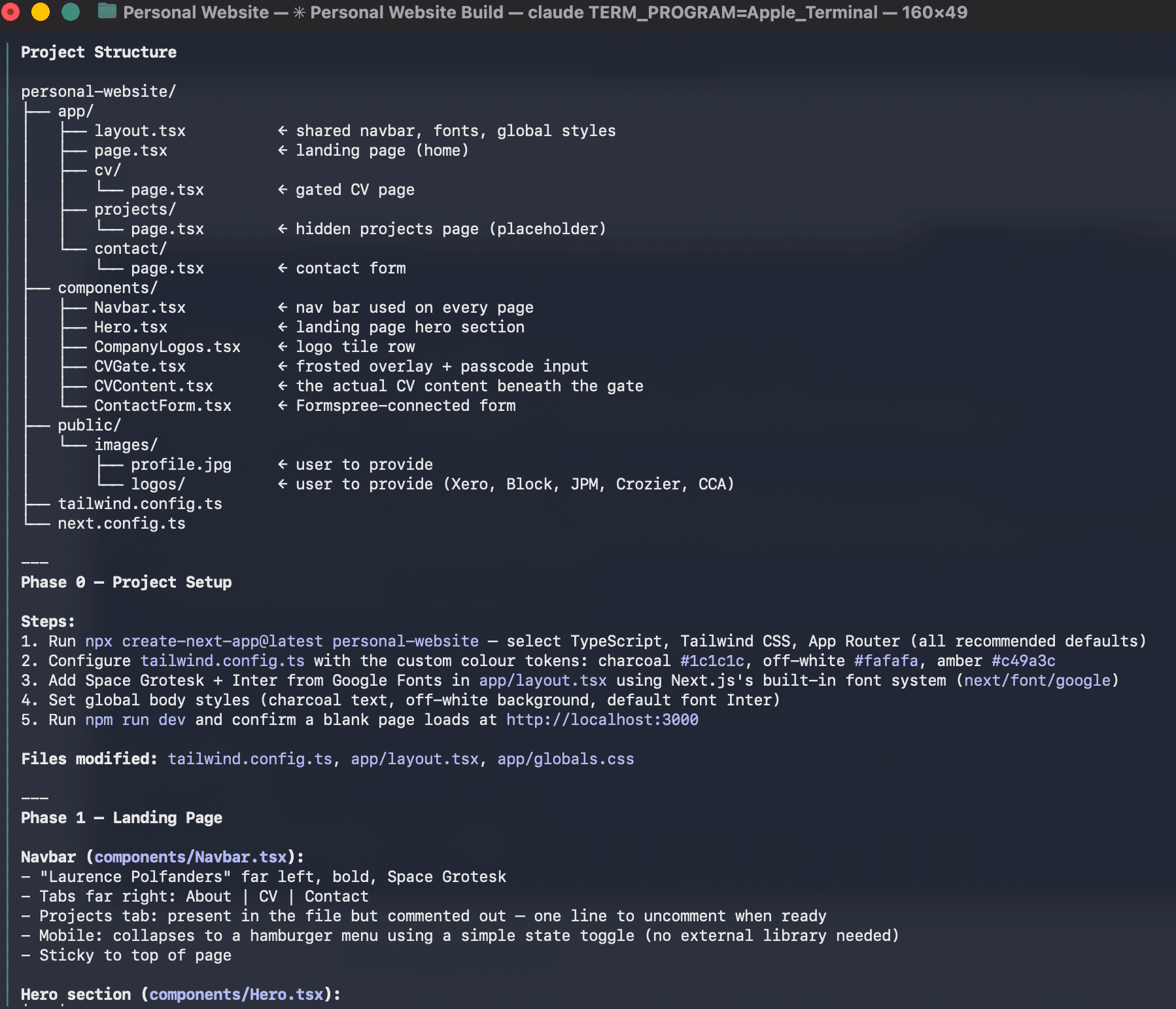
For the design, I used paper.design to explore layouts and find visual references. The primary inspiration was the DissList website which was then softened for a professional context. These reference screenshots were shared directly with Claude Code so it had something concrete to build from.
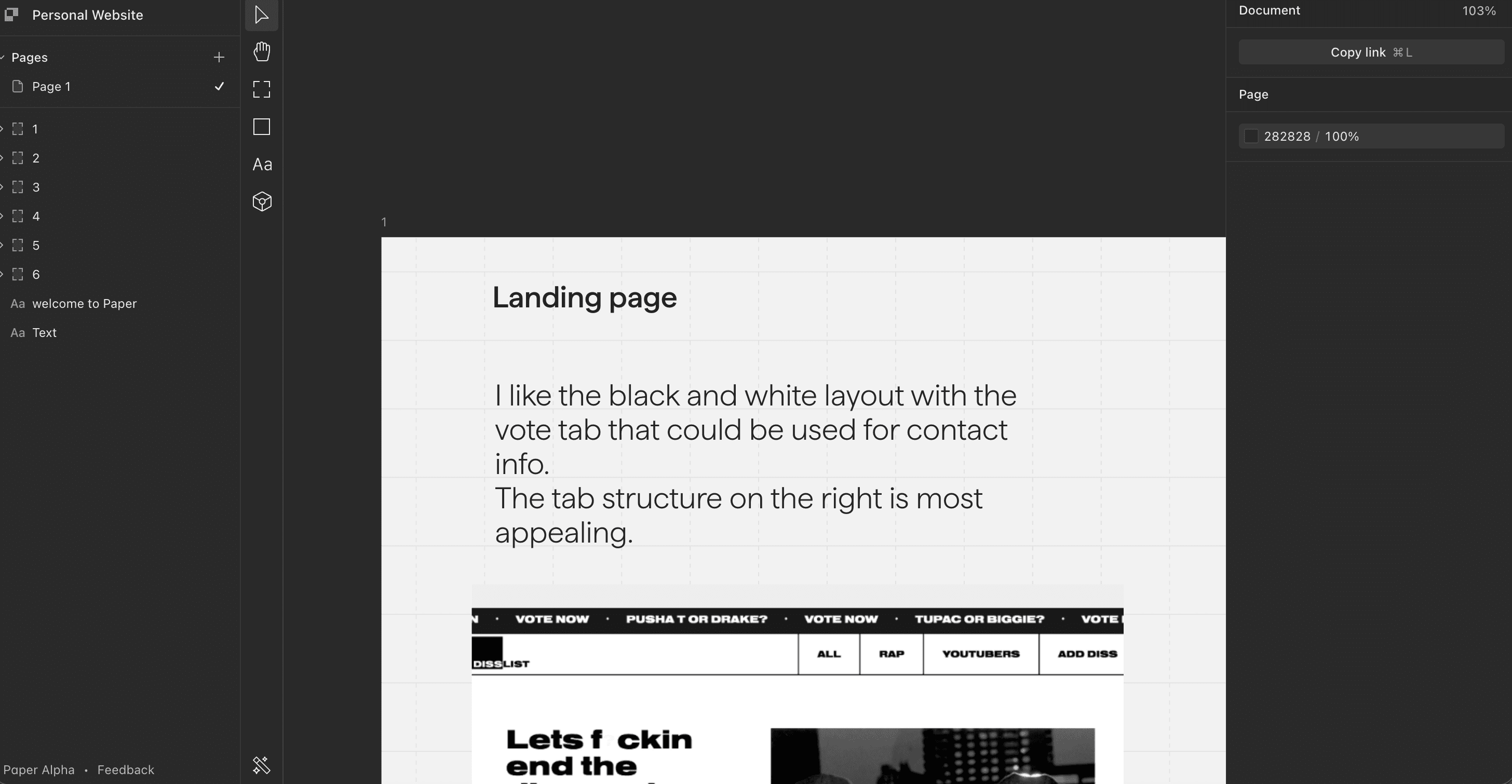
The build itself was iterative. Each phase, from the landing page through to the gated CV and contact form, was a back and forth conversation with Claude Code. This was intuitive and I was able to see this directly in my browser as I could run the site locally.
What I learned
The planning upfront made a measurable difference. When the brief was clear, Claude Code produced results that were close to what I wanted on the first pass. I found this even more so with screenshots for design reference, this was probably the biggest time saver.
One of the surprises was something that shouldn't have been. I'd been told that no technical expertise was needed to build with AI coding tools, and the extent to which that held true was genuinely unexpected. About twelve months earlier I had tried to build a website and gave up after a few hours. The distance AI has covered since then is quite incredible. Assuming it will only get better some of this process will be quicker in the future.
The other key takeaway was that the real time effort in a project like this isn't the build. The actual work was the content: deciding what to say, how to frame it, what to include and what to leave out, making sure each section was complete and said what I wanted it to say. Ultimately I wanted each part of the website finished before I moved onto the next and this was more time consuming than the architecture.
Deployment was entirely new to me. Taking something from a local preview on my laptop to a live URL that anyone can visit was a process I had never been through before, and it was simpler than I expected.